The FAB Twelve Finally Get Together
26.08.26, 09:00 Updated 26.08.26, 11:51 6 Minute Read
Sam Hooper
As one of the newly elected FAB members, these are my personal reflections rather than an official account of the meeting. They may, however, be of interest to fellow OrientEar subscribers and do not necessarily represent the views of all FAB members.
Last Thursday (20 August), on a slightly muggy evening, I had the pleasure of taking part in the first-ever Leyton Orient Fan Advisory Board (FAB) meeting. As one might expect, this initial meeting was rather process-heavy: introductions, establishing the aims of the FAB, Terms of Reference, the basic responsibilities of members and the club – all the boring-but-necessary stuff many of us will be familiar with from our day jobs.
Why the FAB has been established?
At present, only Premier League clubs are required to have a Fan Advisory Board, but thanks to the new Football Governance Act 2025 and Independent Football Regulator (IFR) licensing regime, clubs from the Championship down to the National League will soon be required to establish their own “fan consultation condition”.
From next season, this will formally require clubs to carry out regular consultation on relevant matters with either people elected by the club’s supporters, or people whom the IFR considers genuinely representative of those supporters, either as members of existing supporter groups or as elected representatives. The club was keen to stress that plans for Orient’s Fan Advisory Board had already been in the works for some time and were not a direct response to these new requirements.
For the make-up of Orient's FAB, the club - advised by the FSA - has chosen a blended approach: “The Fan Advisory Board will consist of 12 members… There will be two reserved positions, for a current Leyton Orient Supporters Club (LOSC) member and for Leyton Orient Fans Trust (LOFT) member, as nominated by their membership. The Fan Advisory Board's remaining members will be a panel consisting of four seats reserved for members of existing supporter groups, and six unattached members of the fanbase”.
The selection process was rigorous. We had to submit a written application, followed by a formal interview, after which successful candidates were put forward to a public vote back in June. Representatives from LOSC, LOFT and supporter groups are likely to be well-known to many long-time fans.
Elected members like me who, I would like to believe, help represent another part of the fanbase: supporters of the club who, for various reasons, have historically been less directly involved in its governance and operations.
Half of the elected members will serve on the FAB for only one year, allowing for a staggered rotation of representatives. It is unclear at this stage how it will be decided who steps down, it may be a Big Brother-style secret vote, or something less brutal.
What the FAB is there to do
Mark Devlin (CEO) and Steve Tait (COO) were both in attendance for the first 10–15 minutes, meeting FAB members and sharing their hopes for the board.
According to the club, the FAB will “serve as a new formal link between the club and supporters, offering insights from fan perspectives to help shape strategic discussions and long-term planning, and to create stronger connections and collaboration between the club’s leadership and the wider fanbase”. This will “allow a unified platform for fans to pass comments and ideas on to senior club management and the Board of Directors”.
The FAB is not intended to act as a ‘gatekeeper’ for supporter views. Its role is to help amplify fan concerns and ensure that, as far as possible, the club responds to them. FAB members were also encouraged to find our own ways to connect with our fellow fans – whether that is at games, through social media, or through other opportunities to reach supporters outside our immediate circles.
As well as acting as a conduit for wider fan views, the club was keen for members to bring their own experience and skills to bear on the work of the FAB. There will soon be a dedicated FAB section on the Leyton Orient website, as well as a new email address/inbox allowing fans to get in touch with the FAB directly.
Formal minutes from future FAB meetings will also be published on the website, so everyone will be able to see exactly what was discussed at each meeting and how the club responded to issues raised by FAB members.
Chairman David Gandler is expected to be more involved in the club moving forward following his exit from Fubo in July, and is expected to attend a future FAB meeting.


What will the FAB discuss?
At the meeting, it was explained that Orient’s Board of Directors meetings generally focus on five broad ‘buckets’ of activity:
- Fan engagement and communications
- Working in and with the local community – both in East London and further afield
- Club identity and heritage – the new club museum, current stadium and history
- Matchday experience – Fan Zones, pre- and post-game activities
- Stadium and club infrastructure – the new stadium, new training ground and other capital expenditure projects
The FAB will have the freedom to set its own agenda and table specific issues for discussion. It was suggested that situating topics within the five ‘buckets’ above may be a helpful framework when considering issues worth tackling. As someone who played a lot of Championship Manager/Football Manager in my misspent youth, I was disappointed to hear that ‘on-field’ and footballing issues, including transfers, will be out of scope for the FAB.
Stadium and training ground
With developments promised around both the new stadium and training ground in the coming months, I expect this to become a major, ongoing area of focus for the FAB, and one where supporter views will be absolutely critical.
As I said in my Personal Statement during the election process, the stadium move brings with it real opportunities, but also risks. It is critical that supporters’ voices help shape the entire process, rather than simply being consulted after the fact.
The club confirmed that it still aims to be in the new stadium for its 150th anniversary in 2031. While that still feels a long way off, this is an ambitious timeline and if it is to be met then some critical decisions will need to be made in the next 12–18 months. That makes the establishment of the FAB particularly timely.
"It is critical that supporters’ voices help shape the entire process, rather than simply being consulted after the fact."
Sam Hooper, elected fan representative
The capacity of the new ground will, I suspect, be one of the issues that provokes sharply divergent views among the fanbase. The club has already publicly quoted figures ranging from 20,000 to 35,000 as part of its stated ambition of becoming a “sustainable Championship club”.
The average capacity of Championship clubs over the past three seasons sits at around 27,000 – pretty much smack-bang in the middle of this range. That said, I think it would be fair to say that even the lower end of this estimate could cause concern for some fans. Either way, to make this a reality, it is clear that the club will need to do much more to attract - and keep - future generations of supporters.
Attracting the next generation of fans
My first game at the club was in September 1994, shortly before Barry Hearn’s takeover and the making of the infamous Club For A Fiver documentary. I was in primary school at the time (really showing my age here…) and my school had been given an allocation of tickets by the club, either free or heavily discounted, in the hope of filling the ground but also bringing in a new generation of fans. It clearly worked for me, as I imagine it did for a large number of other supporters.
As anyone who has read a matchday programme recently will know, for many new, young fans, the trip to Wembley for the Play-Off Final will have been their introduction to the club – hopefully converting many into fans for life, as happened to me all those years ago. It also shows how success on the pitch can translate directly into success off it.
As someone who grew up in Leytonstone and has seen the changes in surrounding areas – Walthamstow, Chingford, Stratford and Leyton itself – with large numbers of young families moving to East London over recent years, I believe there is a huge opportunity for the club here.
This will be a personal area of interest for me as a FAB member, so if you have any ideas about how the club can reach and attract the next generation of supporters – or indeed about any other topic – please feel free to get in touch with me directly at SamHOrientFAB@gmail.com.
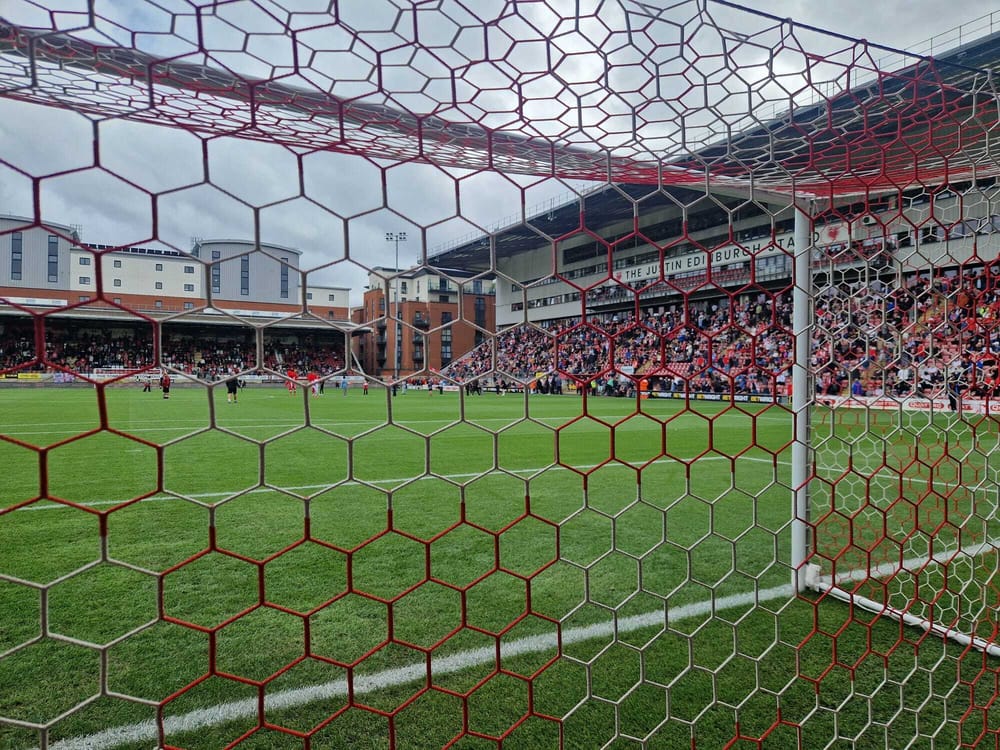
Otherwise, I get to as many games as I can. I’m usually in the Justin Edinburgh West Stand with my partner or brother, and I know other FAB members are based in other stands too. So don’t be shy: come and say hello if you fancy a chat, or if there’s simply something you want to get off your chest about the club. Up the Os!
Related Topics
Sam Hooper Leytonstone born, South London exiled; partially lapsed until the Italian era taught me you don’t know what you’ve got till it’s nearly gone. One of six elected to the Orient Fan Advisory Board, where I do my best to be useful. Aaron Connolly fanboy.